


 Photo of the Month Archive
2009 Archive
A Twist on Tumour Targeting
December 25, 2009
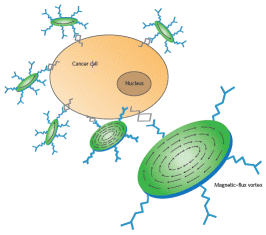 A new way of killing cancer cells with magnetic microdiscs has been described by Drs. Elena Rozhkova and Valentyn Novosad in a forthcoming Nature Materials article. Magnetic spin-vortex discs (shown in green) are coated with antibodies (shown in blue) that bind to membrane receptors expressed by the cancer cells. The application of an alternating magnetic field spins the discs, disrupting the cell membrane and initiating apoptosis (programmed cell death) by means of cell-signalling cascades.
For more information, check out their Nature Materials article which even made the cover page; as well as Jon Dobson's comments about this excellent paper.
Magnetic Fluid / Nanoparticle Hyperthermia Testing System
December 17, 2009
Whilst availability of magnetic nanoparticles, and their use, is significantly increasing, until now there has been no commercially available system to enable hyperthermia testing of these particles in specific applications at a range of relevant frequencies and field strengths.
 nanoTherics has now made available for purchase the magneTherm AC system, a unique device enabling magnetic fluid / nanoparticle hyperthermia testing at a range of user-configurable frequencies from 70 kHz up to 1,000 kHz, the optimum range for in vivo applications. Since the heating capacity of magnetic nanoparticles will vary, depending on size, shape and material properties, it is critical to be able to evaluate heating capacity over this range of frequencies.
For more information, check out nanoTherics' website.
MagForce Nanotechnologies Reaches Primary Study Endpoint in Pivotal Glioblastoma Hyperthermia Study
November 22, 2009
Berlin - MagForce Nanotechnologies AG has successfully completed its single-arm clinical trial on the efficacy of thermotherapy using superparamagnetic nanoparticles in patients with recurrent glioblastoma. The primary study endpoint, which was to extend the median survival time following tumor recurrence by three months compared to a historical control group, was significantly exceeded in the actual results. The 59 patients evaluated to determine the clinical efficacy of treatment with Nano-Cancer® therapy with accompanying radiotherapy attained a median survival time following diagnosis of the first tumor recurrence of 13.4 months* (99% confidence interval: 9.7-17.1 months). Compared to the 6.2-month median survival time* following recurrence observed in a recently published EORTC study with a total of 573 patients**, the survival time with Nano-Cancer® therapy is statistically highly significant longer (p-value < 0.01).
The results of the clinical trial will now form the basis for the conformity assessment procedure required under the German Medical Devices Act (Medizinproduktegesetz). The product file should be submitted as planned by year end to “MEDCERT Zertifizierungs- und Prüfungsgesellschaft für die Medizin GmbH”, a notified body for the certification of medical devices. Following successful completion of the conformity assessment procedure for Nano-Cancer® therapy and EC type testing of the magnetic field applicator, MagForce will be able to market its Nano-Cancer® therapy throughout the European Union.
* Determined with the Kaplan-Meier method** Stupp et al., Lancet Oncol 2009; 10:459-66
To find out more, check here.
Useful New Technique for Nanoparticle Analysis
November 30, 2009
CytoViva's proprietary, advanced optical microscope system creates a high contrast, high signal-to-noise ratio, darkfield-based image and seems to be useful even for the analysis of magnetic Fe2O3 particles, see below or here.
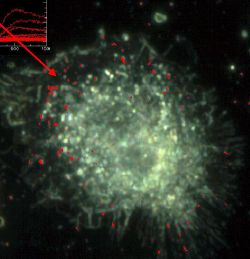 The system enables fast, easy observation of a wide range of nanoscale materials as well as live cells and pathogens. When utilized with its Dual Mode Fluorescence Module (DMF), the CytoViva microscope also provides the ability to observe multiple fluorescent signals and non-fluorescent sample structure simultaneously and in real time. The CytoViva Hyperspectral Imaging System attaches to the CytoViva Microscope System and serves to validate the presence of a wide range of nano-scale materials and biologicals. Operating in the visible near infrared (VNIR) range, this system captures and records the spectrum within each pixel of the field of view, enabling spectral analysis of a selected region or single pixel within the sample. For more information please visit www.cytoviva.com.
The biomedical attraction of magnetic nanoparticles
November 16, 2009
Think small, win big. That's the headline message coming across loud and clear in the latest video feature on physicsworld.com exploring the biomedical applications of magnetic nanoparticles, a multidisciplinary field of endeavour that's witnessed rapid growth over the past five years.
Just press "play" on the video Q&A with Kevin O'Grady, professor of physics at the University of York, UK, for an engaging overview that covers the fundamental science of magnetic nanoparticles as well as looking ahead to the delivery of real-world diagnostic and therapeutic nanoparticle technologies.
For a few more interviews and a couple of new papers, check out http://www.iop.org/EJ/journal/-page=extra.nanomag/0022-3727.
Elusive ’Magnetic Monopole’ Found at NIST
November 5, 2009
Any child can tell you that a magnet has a “north” and a “south” pole, and that if you break it into two pieces, you invariably get two smaller magnets with two poles of their own. But scientists have spent the better part of the last eight decades trying to find, in essence, a magnet with only one pole. A team working at the National Institute of Standards and Technology (NIST) has found one.
“These are not the monopole particles Dirac predicted—ours are huge in comparison—but they behave like them in every way,” said Jeff Lynn, a NIST physicist. “Their properties will allow us to test how theoretical monopole particles should behave and interact.”
To find out more, read here.
A New Attraction - Now Even Useful for the Chemists!
October 31, 2009
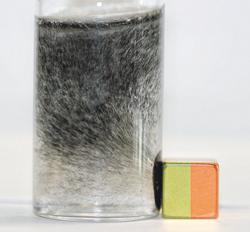 The Chemical & Engineering News, which is the weekly news magazine of the American Chemical Society, just published an article about magnetic particles and the newest companies involved in making them. The new target audience of strongly magnetic iron and cobalt particles with carbon coatings that give them "astonishing stability" are the chemists who can now start to use magnetic particles for cleaning up reactions and recover products without additional purification steps.
Read more about companies such as TurboBeads, Strem Chemicals, BASF which have big plans with these new applications here.
Matrix-Insensitive Protein Assays Push the Limits of Biosensors in Medicine
October 26, 2009
Richard Gaster, Sanjiv Gambhir, Shan Wang et al. report how they have used a combination of established techniques to devise an ultra-sensitive assay that detects biomarker proteins associated with disease or metabolic states. Their pioneering approach uses magnetic signals to overcome the effects of the biological matrix, the host of compounds found in all biological samples that cause interference in assays. The sensitivity of the authors’ technique is 1,000 times better than the current gold-standard method, the enzyme-linked immunosorbent assay (ELISA).
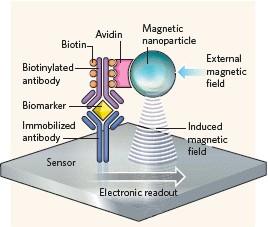 The ultra-sensitive
nanoscale sensor that detects biomarker
proteins. Antibodies on the surface of the sensor
specifically trap the biomarker of interest from
a sample. The sensor is then washed with a
solution containing more antibodies, which
also bind specifically to the biomarker. These
antibodies are tagged with biotin molecules,
which bind to the protein avidin. When avidincoated
magnetic nanoparticles are passed over
the GMR sensor, they bind to the biotinylated antibody.
The sensor is activated by applying an external
magnetic field. This induces a magnetic field in
the nanoparticles, which causes an electronic
response in the sensor that correlates with the
number of bound nanoparticles.
The ultra-sensitive
nanoscale sensor that detects biomarker
proteins. Antibodies on the surface of the sensor
specifically trap the biomarker of interest from
a sample. The sensor is then washed with a
solution containing more antibodies, which
also bind specifically to the biomarker. These
antibodies are tagged with biotin molecules,
which bind to the protein avidin. When avidincoated
magnetic nanoparticles are passed over
the GMR sensor, they bind to the biotinylated antibody.
The sensor is activated by applying an external
magnetic field. This induces a magnetic field in
the nanoparticles, which causes an electronic
response in the sensor that correlates with the
number of bound nanoparticles.
A comment about this paper has also been posted in the Nature of Medicine issue.
Philips and Bruker BioSpin Form MPI Partnership
September 24, 2009
Philips Healthcare and preclinical technology developer Bruker BioSpin have inked a memorandum of understanding to develop magnetic particle imaging (MPI) scanners for the preclinical market.
Under the terms of the deal, Bruker BioSpin said it intends to develop and manufacture MPI scanners designed for preclinical use at its facilities in Ettingen, Germany. Both firms will co-market the resulting product.
MPI uses the magnetic properties of iron-oxide nanoparticles to produce 3D images of nanoparticle concentration after injection into the bloodstream, according to Philips of Andover, MA, and Bruker BioSpin. The companies believe the development of MPI technology will help researchers gain new information on disease processes at the organ, cellular, and molecular level.
Facile Synthesis of Superparamagnetic Fluorescent Fe3O4/ZnS Hollow Nanospheres
September 5, 2009
A very simple strategy for the synthesis of superparamagnetic and fluorescent Fe3O4/ZnS hollow nanospheres is presented. These hollow nanospheres are not only nontoxic with a highly porous shell and have diameters of <100 nm but also exhibit very good magnetic resonance and fluorescence.
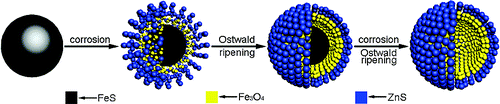
Take a look at it here.
Cobalt Generates Magnetic Polymer
September 5, 2009
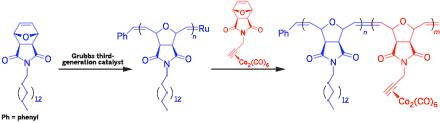
By incorporating a monomer with a cobalt ligand into a block copolymer, researchers have produced a magnetic material that could vastly increase the density of information storage. Gregory N. Tew, professor of polymer science and engineering at the University of Massachusetts, Amherst, reported the material on Aug. 17 at the ACS national meeting in Washington, D.C. This seems to be the first report of a processible, ferromagnetic polymer which is prepared at room temperature and is magnetic at room temperature.
By contrast, Tew said, a homopolymer formed solely from the cobalt-containing monomer is not magnetic.
"As far as I know, this is the first report of a ," commented University of Bristol chemistry professor Ian Manners, who has studied metal-containing polymers for almost 20 years.
Quantum Dots Can Be Magnetized by Light
September 5, 2009
Scientists have discovered that chemically prepared, impurity-laced quantum dots can spontaneously line up their magnetic fields with the application of light. Notably, this process can occur at up to room temperature.
Chemistry professor Daniel R. Gamelin of the University of Washington, Seattle, and colleagues there and at the University of Duisburg-Essen, in Germany, doped cadmium-selenide quantum dots with manganese, then bombarded them with laser light, causing the dots to generate large magnetic fields.
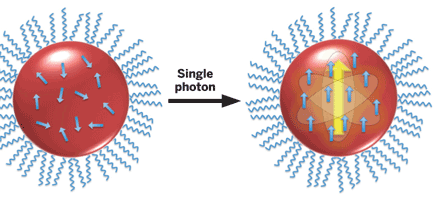
Take a look at the original article here.
Researchers Say Magnetized Stem Cells May Be Used to Treat Heart Attacks
August 19, 2009
BBC News (8/17) reported that "heart attacks and other vascular injuries could eventually be treated using regular injections of magnetised stem cells," according to research published in the Journal of the American College of Cardiology: Cardiovascular Interventions.
The UK's Daily Mail (8/18, Derbyshire) reports that, "in the groundbreaking experiment, stem cells were 'tagged' with microscopic magnetic particles and" were "then injected into the bloodstream of rats suffering artery damage." Physicians "used a magnet outside the body to guide the cells into position -- allowing them to repair and restore damaged blood vessels."
The UK's Telegraph (8/18, Smith) quotes senior study author Dr. Mark Lythgoe, of the UCL Centre for Advanced Biomedical Imaging, as saying, "Because the material we used in this method is already approved, we could see this technology being applied in human clinical trials within three to five years.'" Dr. Lythgoe added, "It's feasible that heart attacks and other vascular injuries could eventually be treated using regular injections of magnetised stem cells."
Take a look at it here.
New IEEE Magnetics Newsletter is Available
July 7, 2009
To get a bigger picture of magnetism and its many uses, you might want to read the latest edition of the IEEE Magnetics Society Newsletter.

Take a look at it here.
Iron Pnictides - Key to High Temperature Superconductivity?
July 25, 2009
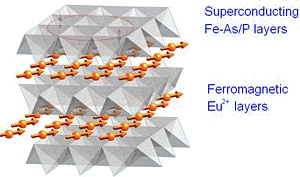 The discovery that compounds known as iron pnictides can superconduct at 50 degrees above absolute zero has reignited physicists' quest for better high-temperature superconductors and may offer clues to unlocking a 20-year mystery.
To learn more, click here.
Cleaning of Antique Pictures with Magnetic Nanoparticles
June 24, 2009
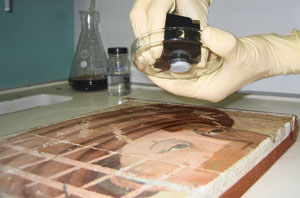 By enlisting magnetic nanoparticles, Baglioni, a chemistry professor at Italy's University of Florence, has created a material that can soak up cleaning solutions or microemulsions; squeeze them out onto the surface of a painting, fresco, or sculpture; and then reabsorb them without a human hand ever coming into contact with the delicate artwork.
For more information, please check here.
 Virus Templates to Make Multifunctional Nanocomposites
July 1, 2009
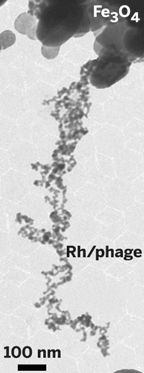
Viruses can be used as biological templates for nanoscale heterostructures without the need for extensive genetic engineering, a group led by Raymond E. Schaak of Pennsylvania State University reports (Chem. Mater., DOI: 10.1021/cm900869u). Schaak and colleagues took advantage of nonspecific electrostatic interactions along the body of the M13 bacteriophage, a filamentous virus that infects bacteria, to nucleate rhodium nanoparticles and coat the length of the phage with Rh. Having previously selected a phage with a peptide at the tip that preferentially binds Fe3O4, the researchers then added Fe3O4 particles to the head of the phage. The combined modifications turned the phage into a magnetically separable catalyst, with the rhodium able to hydrogenate styrene to ethylbenzene and the Fe3O4 contributing magnetic properties.
The approach provides a straightforward platform for designing site-directed multifunctionality into commercially available M13 bacteriophage and serves as a simple method for introducing multicomponent architectures into phage-based scaffolds.
New Commercial System for Improved Gene Transfection
June 24, 2009
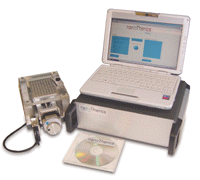 nanoTherics is now selling a new transfection device which provides up to 1,000x higher transfection efficiency compared to the best currently available cationic lipid agents at short transfection times as well as easy scalability and reduced costs .
The system, which uses oscillating magnets/fields to promote improved particle/DNA uptake into cells, allows flexibility in number, type and scale of transfection. For more information, check it out at
http://www.nanotherics.com/products.html
A Colourful Future for MRI
June 24, 2009
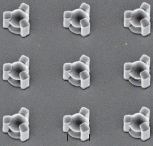 If you have been to our meeting, then this is old information - but it is still hugely exciting. Zabow and colleagues
are bringing ‘colour’
to MRI. They have developed an approach to
produce MRI contrast agents with characteristic
spectral signals, based on the control of
mechanical structures. Different versions of
these probes can be used simultaneously, and
are distinguishable by the geometry-dependent
spectral ‘colour’ of their signals.
If you have been to our meeting, then this is old information - but it is still hugely exciting. Zabow and colleagues
are bringing ‘colour’
to MRI. They have developed an approach to
produce MRI contrast agents with characteristic
spectral signals, based on the control of
mechanical structures. Different versions of
these probes can be used simultaneously, and
are distinguishable by the geometry-dependent
spectral ‘colour’ of their signals.
Check out their original Nature article or what Richard Bowtell had to say about their work.
Magnetic Backpacks for Cells?
November 12, 2008
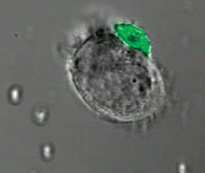 Living cells wearing microscopic "backpacks"--nanostructured polymer patches loaded with chemical cargo--might one day be able to ferry drugs or imaging agents to diseased tissue. MIT researchers say that they have successfully constructed such backpacks, filled them with magnetic particles, and tethered them to the surfaces of immune cells without disrupting the cells' ability to interact with their environment. The work is described in a recent issue of Nano Letters.
For more information, check here.
Magnetic Paint Helps to Develop Better Corn Seeds
November 24, 2008
New Ways of Growing Cells at High Density
March 30, 2009
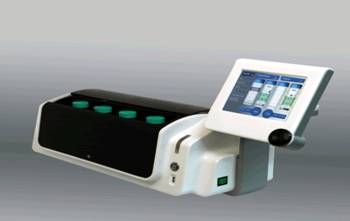 The company Hamilton Life Science Robotics unveiled the BioLevitator, the first benchtop 3D cell culture system on the market.
The BioLevitator utilizes the Global Eukaryotic Microcarrier (GEM*) technology from Global Cell Solutions. The GEM provides an optically clear and non-autofluorescent pipettable substrate for adherent cell lines. The GEMs contain silica-coated iron particles that facilitate suspension of the cells without impellers. The particles’ magnetic properties also enable the pelleting of cells for media changes. Custom protein coatings, including basement membrane, are available to facilitate growth of difficult cell lines and the GEM’s alginate core inhibits ice crystals during cryopreservation, ensuring high survivability and cell function.
The company Hamilton Life Science Robotics unveiled the BioLevitator, the first benchtop 3D cell culture system on the market.
The BioLevitator utilizes the Global Eukaryotic Microcarrier (GEM*) technology from Global Cell Solutions. The GEM provides an optically clear and non-autofluorescent pipettable substrate for adherent cell lines. The GEMs contain silica-coated iron particles that facilitate suspension of the cells without impellers. The particles’ magnetic properties also enable the pelleting of cells for media changes. Custom protein coatings, including basement membrane, are available to facilitate growth of difficult cell lines and the GEM’s alginate core inhibits ice crystals during cryopreservation, ensuring high survivability and cell function.
To check out the BioLevitators specifications, see here.
Ancient Eukaryotes Produced Tiny Iron Spearheads
October 27, 2008
Exceptionally large crystals of magnetite found in Atlantic coastal sediments and dating to 55.6 million years ago may have been formed by eukaryotes during a period of global warming, reports a group of researchers led by Hojatollah Vali of McGill University, in Montreal (Proc. Natl. Acad. Sci. USA, DOI: 10.1073/pnas.0803634105).
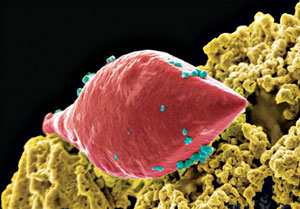 The researchers found two unprecedented shapes of magnetite crystals: flattened spearheads that are up to 3.8 μm long, 1.4 μm wide, and 0.7 μm high; and cylindrical spindles, tapered on each end, that are up to 3.3 μm long and 0.5 μm wide. The complex shapes are likely to be biogenic in origin rather than formed through normal crystallization, the researchers say. Furthermore, because the crystals are larger than those known to be made by bacteria, they are more likely to have come from eukaryotes, which may have used the particles for their magnetic properties or their hardness. The researchers also identified a shell-like structure assembled from spearheads, with the stems oriented inward and the tips pointing outward, suggesting that the crystals served a structural and perhaps protective purpose around eukaryotic cells.
Artificial Bacterial Magnetic Flagellae
April 6, 2009
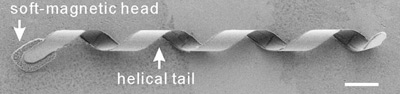
Inspired by the natural design of bacterial flagella, Bradley Nelson et al from the Federal Institute of Technology in Zurich, Switzerland made the magnetic nanorobots seen here sized between 25-60 µm. The helical swimmer consists of a helical tail resembling the dimensions of a natural flagellum and a thin soft-magnetic “head” on one end. The nanorobot swims with helical motion precisely controlled by three orthogonal electromagnetic coil pairs. Self-propelled devices such as these are of interest in fundamental research and for biomedical applications. For more details, check here.
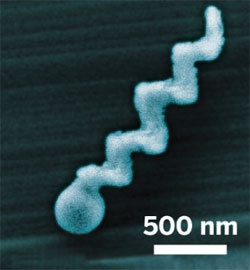 Even smaller nanopropellers have been developed by Peer Fischer and Ambarish Ghosh at Harvard University's Rowland Institute. Their just 1-2 µm long "corkscrew swimmers" might be attractive as carriers for chemicals or to conduct rheological research. See more about these cobalt coated nanopropellers here.
Paris 13 University and Magnisense created platform for next generation magnetic markers
March 18, 2009
Need to Refresh your Magnetic Carrier Spirits in a Cloister?
July 7, 2009
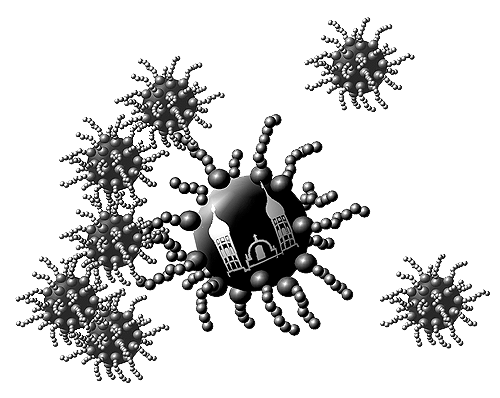 If you speak German and would like to stay on top of ferrofluids, why not visit one of the biggest abbeys in the south of Germany, in Benediktbeuern? Prof. Stefan Odenbach organizes there on September 22-25, 2009 the next and already
9th German Ferrofluid Workshop
It is a great opportunity of hearing about the very active research going on in Germany in this area. And that combined with great food, a hike in the alps, what could be more relaxing. Deadline for abstract submission is August 1, 2009.
 The Special JMMM Issue with 80 Original Magnetic Carrier Articles has been Shipped!
As after each meeting, we published a special issue of the Journal of Magnetism and Magnetic Materials (JMMM) filled with 80 original, peer-reviewed articles. All meeting participants will automatically receive a copy of this special issue free of charge. If you have not been to our meeting and are interested in a copy, then you will be able to order the special issue for US$75, which includes shipping:
Please refer to the 2008 Meeting Page for all the information available about our most recent Magnetic Carriers meeting in Vancouver, BC, Canada. This 7th International Conference was again a wonderful gathering of 350 people from 32 countries interested in magnetic particles. It was amazing to see how many new applications and uses are being investigated. For a write-up about the meeting, see here.
Selectin-Targeting Magnetic Nanoparticles for Brain Lesion Imaging
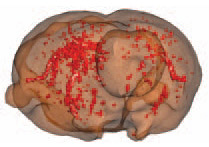 Benjamin G. Davis, Nicola R. Sibson, Daniel C. Anthony, and coworkers attached glycan ligands to amine-functionalized, dextrancoated iron oxide nanoparticles. The best ligand they tried is sialyl LewisX, a tetrasaccharide that targets selectins, which are carbohydrate-binding proteins involved in inflammation. The team modified the ligand with an S-cyanomethyl linker that serves as a protecting group until the ligand is added to the nanoparticle. The team used the resulting glyconanoparticles as contrast agents in MRI studies of rats afflicted with conditions similar to multiple sclerosis or stroke. The glyconanoparticles revealed lesions in these disease models at an earlier stage than did other MRI contrast agents, a result that the researchers suggest could lead to methods for earlier diagnoses. For details, click here.
BioMagnetic Research and Technology no longer receives submissions
 BioMed Central has ceased publication of the journal "BioMagnetic Research and Technology" in the mid of November 2008. We are rather unhappy about this development, but the cost charged by BioMed Central for the submission of articles was just not proper for our community. We would like to thank Ivo Safarik and Mirka Safarikova for doing a great job as Editors-in-Chief!
It is still possible to access, free of charge, all the previously published articles. Please check them out, if you have not done so yet at
http://www.biomagres.com/
Magnetic Curtain
 And now to something completely different, a curtain which you can shape to any form. Through the incorporated structure and magnets, it stays in the shape you push and pull it to. The designer Florian Krautli developed this eye-catching contraption. Link.
Scientists Develop Magnetic Nanoparticles for Dual-Modality Imaging
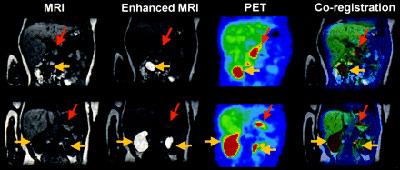
Two groups of scientists have developed magnetic nanoparticles that combine the functionalities of MRI and PET contrast agents for use in dual-modality imaging machines. The first group created an albumin-coated magnetic nanoparticle made from manganese and iron with attached radioactive iodine as a dual-modality agent for imaging sentinel lymph nodes in mice. The other group developed a magnetic iron oxide nanoparticle for imaging tumors in mice. Cool and useful stuff! Link.