

Inexpensive Solution for Storing Solar Energy as Hydrogen
December 16, 2012
 How can solar energy be stored so that it can be available any time, day or night, when the sun shining or not? EPFL scientist Kevin Sivula and colleagues are developing a technology that can transform light energy into a clean fuel that has a neutral carbon footprint: hydrogen. The basic ingredients of the recipe are water and metal oxides, such as iron oxide, better known as rust. The team purposefully limited itself to inexpensive materials and easily scalable production pro-cesses in order to enable an economically viable method for solar hydrogen production. They hope to attain efficiencies of 10% in a few years, for less than $80 per square meter, a price competitive with traditional methods of hydrogen production.
Maybe we can further improve on this process by using magnetic particles?
Check it out at http://swissinnovation.org/news/web/2012/06-121111-ce.html
Welcome to the Winter 2012 Issue of Magnetics Magazine!
December 12, 2012A new issue of the Magnetics Magazine is available: Winter 2012. This industry driven magazine reviews applications of magnets in the "real" world, like for example in wind turbines, discusses permanent magnets and rare earth availability, shows magnetic design software and many more engineering related issues (Spintronics etc).

This Winter 2012 issue also includes an industry outlook, a description of the upcoming Magnetics 2013 conference, and the newest resource guide in the Magnetism world with all the businesses and industries.
Double-Edged Iron
December 12, 2012
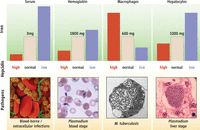 Hepcidin is a small peptide hormone discovered by three groups investigating iron-regulated liver genes and antimicrobial peptides. This new hormone turned out not only to regulate iron but also to have homology with peptides required for innate immune responses. Drakesmith and Prentice (p. 768) review the importance of hepcidin during infection, explaining how it is involved in withholding iron from microbial pathogens to curtail replication and how intracellular bacteria are able to thwart this host response. Recent work highlights the potential hazards of iron-supplementation in infection, particularly in malaria, whereby an overload of iron, meant to treat malaria-induced anemia, may negate the protective effects of hepcidin.
Theranostic Iron Oxide Nanoparticles in the treatment of Type I Diabetes
December 08, 2012
Anna Moore and co-workers at Harvard Medical School have developed an MRI contrast agent with RNA interference function for protecting transplanted islets from immune rejection in β-cell replacement therapy. 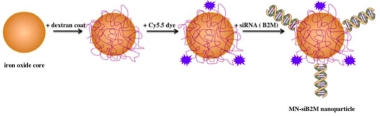 This theranostic probe (MN-siB2M) was synthesized by coating iron oxide cores with amino-dextran, then conjugating a fluorescent dye, and further decorating via SPDP-chemistry with siRNA that downregulates the expression of β2 microglobulin, a key component of the major histocompatibility complex class I molecules that contribute to immune rejection. MN-siB2M-labelled human islets were transplanted into immunodeficient mice enabling non-invasive monitoring of graft longevity through MRI. Furthermore, mice transplanted with MN-siB2M-labelled islets showed improved preservation of graft volume after 2 weeks and a delay in diabetes onset after adoptive transfer of T cells.
For more information check out the original article at: http://diabetes.diabetesjournals.org/content/61/12/3247.long
Meeting Announcement: Frontiers in BioMagnetic Particles III
December 07, 2012
 What should you do if you want to come to our next Magnetic Carrier meeting in Dresden 2014, but don't have the patience to wait for more than a year? You could take part in our sister/brother meeting in Telluride, Colorado titled "Frontiers in BioMagnetic Particles". It will be held from June 2-5, 2013 and is organized by Thompson Mefford and Jeff Anker.
Topics of the meeting will be: biomedical imaging and sensing, magnetic separations, drug delivery, hyperthermia, biomedical applications, entrepreneurship, and a separate student session will address career development. The social program will include a traditional Colorado cook-out and excursions in the surrounding mountains. Abstracts are due March 1, 2013. Applications for student travel scholarships are due at the same time.
For more information: www.magneticnanoparticle.com
Webinar: Create Custom Tools for Electromagnetic Designs
November 29, 2012
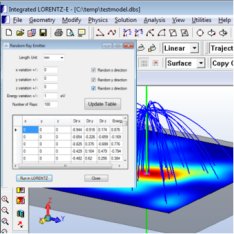 The company Integrated Engineering Software is organizing a webinar about how to create custom tools for the analysis of electromagnetic designs. If that interests, then you might take part in their webinar on
Thursday, December 13, 2012 - 9:00AM CST
They will present API, where users can integrate their CAE software programs to other applications they need for design analysis, bringing each particular model to an even higher level of sophistication. One example will be how to optimize a magnetic core shape to obtain a desired B field profile.
The presentation of these features will be approximately 30 minutes followed by a 15 minute question/answer period.
To register, click here.
Self-Healing Polymer Composite Made with Nickel Microparticles
November 26, 2012
.JPG) An interesting self-healing material was developed by Zhenan Bao and coworkers at Stanford University. It is made of a randomly branched, hydrogen-bonding polymeric network that embeds nickel microparticles that have nanostructured surfaces.
An interesting self-healing material was developed by Zhenan Bao and coworkers at Stanford University. It is made of a randomly branched, hydrogen-bonding polymeric network that embeds nickel microparticles that have nanostructured surfaces.
Bao and coworkers started with a mixture of polyurethanes and added as
much as 30% by volume nickel microparticles to make the polymer conductive. The polymer network forms hydrogen bonds with itself and with oxides on the surface of the nickel particles. The hydrogen bonds are the weakest bonds in the system, and they preferentially break when the composite is damaged. When cut pieces of the material are brought together, the hydrogen bonds quickly re-form.
The healing of the material is so rapid that the electrical conductivity is restored to more than 90% of its original value within 15 seconds. The mechanical properties
take a little longer. Complete healing takes 30 minutes. And the material can heal itself repeatedly, as shown by using the material as electronic skin on a doll-like mannequin. A touch sensor on the palm responds to pressure, whereas a flexion sensor at the elbow joint responds to bending. The team now seeks to make the material stretchable as well as bendable so that it will be even more like natural skin.
For more information, check out the original article at
http://www.nature.com/nnano/journal/vaop/ncurrent/full/nnano.2012.192.html.
Futuristic Concept: The IAT Maglev, the New Doubledecker Magnetic Levitation Train
November 25, 2012
 Dieter Schramek and his Innovative Access Team (IAT) have further developed Germany‘s Transrapid system - the magnetic levitation train (or maglev) as it is normally called. They are now looking for partners and/or shareholders to make their revolutionary new traffic system a reality.
Maglev trains have the potential to solve future transportation problems by providing a clean technology, high speed transportation (up to 400 km/h) at affordable prices. The new IAT-maglev saves space, time and energy due to its construction (double decker) and innovative energy supply system. Check out this interesting system at
http://www.iat-maglev.com/?q=Start
For more information, check out our Archives.
September 2017
Search this site with the power of